Monday, August 15, 2022

THE WEIR


The Live Rooms, Chester

Reviewed on 10th August 2022


Writer: Conor McPherson

Director: Marian Newman


This really isn’t the most audience friendly play. All dialogue, a single set, little movement, and relying totally on the cast’s ability to hold the attention of the audience. Thankfully, Chester-based theatre company Against The Grain pulled it off.

The setting is the cosy bar of a small pub, in a rural southern Irish town that time forgot. In a smart move, the company decided to use the actual small bar at Chester’s Live Rooms, which automatically lent a realistic and atmospheric feel to the evening. There was little that could have been done about the heat, on such a hot summer’s night, and with a lesser quality production this could have seriously distracted the audience. However, our attention was held throughout, the ensemble cast were uniformly strong, and The Weir cast its spell superbly well.

Jim (Stuart Evans), Finbar (Dhugal Fulton), and Laura Smith (Valerie). Photo: Steve Cain.


The Weir is deceptive, initially suggesting that we are simply witnessing a collection of supernatural tales, told by a motley group of characters who each have quite a sad, unfulfilled life, and the theme being that the human understanding of the immediate ‘real’ world is no more comforting or complete than the ‘other worlds’ - the non-tangible, the ethereal. However, it is far cleverer and much more terrifying than that.

Director Marian Newman allows the humanity of the writing to shine through, and completely trusts her cast to deliver the magic. There is no reliance on lighting or mood music to create the ‘spooky’ atmosphere, and no shock tactics. Credit to Steve Lincoln’s subtle and controlled use of sound and lighting. When the chill wind begins to swirl around the pub, the sound is almost imperceptible, and at times I wondered whether it was actually coming from outside the venue. A fellow audience member stated, later, that they could actually feel the cooling effect of the wind at times (this is pretty remarkable, as the oppressive heat was constant in the room).

Jack (Mark Newman), Brendan (Simon Phillips), Jim (Stuart Evans), Valerie (Laura Smith), and Finbar (Dhugal Fulton). Photo: Steve Cain.

Amiable barman Brendan (a subtle, low-key performance from Simon Phillips) arrives to open up for the evening, and is obviously none too concerned with security, as he soon leaves the bar unattended, with the front door unlocked. In strolls the evening’s oldest regular, garage owner Jack (Mark Newman) who proceeds to casually serve himself a drink (popping the money into the old-fashioned till). The scene is set. This is a pub that is also a home, and a refuge, to the inhabitants of this remote rural backwater. Brendan and Jack chat amiably about everyday matters, and are soon joined by young gambler Jim (Stuart Evans); we soon discover that they are all quite lonely at heart, and this unassuming little alehouse is their refuge. There are rumours about the relationship between their well-to-do friend Finbar (Dhugal Fulton) and Valerie, a young woman who is looking to move into the area. When all our characters are assembled, Jack kicks off the storytelling with a local myth about a ‘faery road’ that was rumoured to pass through a local house. Newman’s comical, disgruntled, slightly naïve character modestly relates an unnerving warning about interfering with the unknown, and the actor subtly shifts from gentle comedy to undulating shades of deepening anxiety and deep-rooted fear. Probably the most disturbing tale is related by Jim; a chilling real-life experience involving the spectre of a paedophile and their attempts to continue their activities beyond the grave. Serious and unnerving as the various tales are, they are never allowed to seduce the audience into a melancholic, unsettled mood. McPherson’s characters are beautifully well-rounded, and the talented ensemble cast remind us of their humanity and flawed nature, as they regularly pull the rug out from under each other, and good-naturedly prick the bubbles of pomposity. Laura Smith’s Valerie is the alien newcomer. The men buzz around her, each seeking to impress, whilst cheekily undermining the flash, but thin-skinned Finbar. Quietly observing her comically eager suitors, and their almost desperate desire to cater to her every need, Valerie eventually delivers her own disturbing tale, of a tragic untimely death, and a terrifying aftermath. Her story hits hard. Smith has a wonderful voice for the stage, and held the audience spellbound with a heartfelt, quietly emotional delivery of intensity and gut-wrenching sorrow.

Brendan (Simon Phillips), Jim (Stuart Evans), Jack (Mark Newman), Finbar (Dhugal Fulton), and Valerie (Laura Smith). Photo: Steve Cain.

This was an excellent production, and deserves to be seen in a larger venue. A brave venture for an amateur company (although, you’d be hard-pressed to consider this show as anything less than 100% professional).

Wednesday, August 03, 2022

PETER HOOK & THE LIGHT - JOY DIVISION: A CELEBRATION


O2 Apollo, Manchester

Reviewed on 29th July 2022

First published for The Reviews Hub

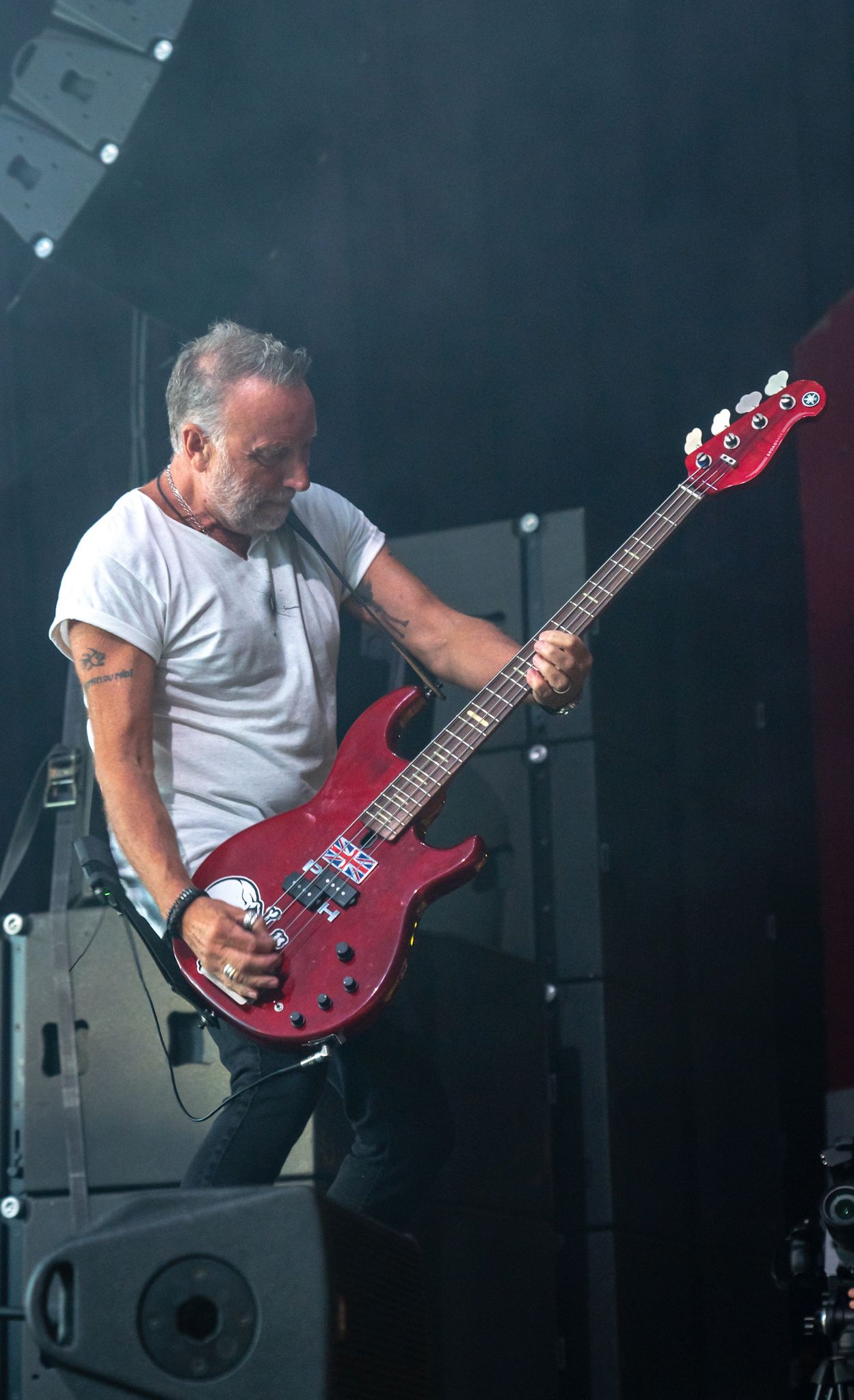
Peter Hook, legendary ex bass guitarist with New Order, made a triumphant return to Manchester with a storming, emotional, and thrilling celebration of his previous band Joy Division. Performing, in full, the classic albums Unknown Pleasures and Closer, with an opening selection of New Order tracks. The faded glory of Manchester’s cavernous and ornate Apollo theatre provided a superb atmosphere for this almost religious musical experience. Joy Division made only two albums before their charismatic lead singer & lyricist Ian Curtis killed himself in 1980, and this celebration was initially scheduled for 2020, the 40th anniversary of his death. Hook has spoken often of how traumatic his band mate’s death was, and how it was a miracle that the surviving members carried on under a new name, and became one of the biggest bands of the 80s, New Order. Peter Hook & The Light had been scheduled for 8pm, with ‘no support’, but Manchester DJ Mike Sweeney’s band, The Salford Jets, had actually been on stage from 7pm. Unfortunately, many of the audience missed them, as the auditorium only began to fill up in time for the main act.


Beginning in sombre, subdued mood (the delicate lighting reflecting this) with New Order’s supremely emotional and beautiful instrumental ‘Elegia’, the scene was set in fine, respectful style. In English literature, an elegy is a lament for the dead, and this haunting, minimal, and sparse piece of pure atmosphere, not unlike Mike Oldfield’s Tubular Bells, was a perfect fit for Hook’s sublime guitar skills. Written in memory of Ian Curtis, this performance of ‘Elegia’ was hugely effective in successfully conjuring up the spectre of his lost friend, and reminding us all of why we were here, and what we were celebrating. Hook had the audience in the palm of his hand from this point on. What a beginning!

The band then powered on through a short selection of New Order favourites, performed with gusto and sheer rockstar aggression. One suspects this was a desire to give the audience some (relatively) upbeat numbers, in preparation for the more doom-laden presentation of Joy Division’s 1979 debut album, Unknown Pleasures, with its more enigmatic, sorrowful, and often deeply distressing lyrics. The New Order opening section culminated in the jaunty, The Perfect Kiss. With its classic dancefloor energy, an ode to youthful, carefree romance, surreal chirpy croaking frog chorus, and memorable lyric ‘let’s go out and have some fun’, this was perhaps a cheeky ironic nod to the distinct lack of ‘fun’ on the Unknown Pleasures album.

For a man who has been at the top of his profession for nearly five decades, Hook looked in great shape, and his voice was on top form. Doing full justice to Joy Division’s enduring tracks, particularly the audience favourites ‘Shadowplay’ (a real barnstormer), and ‘New Dawn Fades’ with its searing, sorrowful, suicidal lyrics (‘a loaded gun won’t set you free, so they say’), the song rises and rises with painful, almost unbearable intensity. Curtis’ voice, and inner life, had been so much at the heart of this blistering epic, but Hook channelled his friend’s heart and soul into every line, and every guitar stroke. The pain was palpable, as the memories of forty two years ago could surely never be purged. Peter Hook always comes across as thick-skinned, and more than able to handle the pressures of life, but being forever symbiotically connected to such an abyss of despair must take its toll. Happily, ‘Hooky’ (as he is affectionately known by fans and friends alike) has channelled this primordial energy of chaos into his performance, and the result is sheer elation. Yes, Joy Division’s music (written by Hook, and his ex-bandmates Bernard Sumner and Stephen Morris) is certainly dark, and perhaps excavates the very depths of the collective human soul, but it is also inspiring, life-affirming, and can transmute tears into joy. Hook’s energy alone fired every song into the spiritual stratosphere, ably backed by his talented son Jack Bates (taking on bass guitar duties, on certain songs, allowing his father to concentrate on the vocals), and guitarist David Potts creating a tight knit unit.

‘She’s Lost Control’, a quirky, popular track about a girl that Curtis saw suffering a violent epileptic fit (which he often endured himself, sometimes on stage during a performance) got an almighty roar from the crowd, as the staccato opening bars blasted out.  Unfortunately, a good few people headed for the bar as the final, lesser-known tracks were performed. A great pity, as it was a rare opportunity to hear them live, and were given just as much care and attention as the hits.


‘Closer’, the album released just two months after Curtis’ untimely death, contains ever more doom-laden lyrics, and saw the band reaching new heights of creativity. Curtis, though, was struggling, and confessed that he felt he was in ‘a whirlpool, being pulled down, drowning’. Once again, Hook’s energy and exemplary guitar skills brought the album to majestic life, with every song feeling fresh and contemporary. Despite the searing jet-black emotional honesty of the lyrics, and the memory of where they led Ian Curtis to, Hooky’s rendition transforms them into something more triumphant and inspiring. Closer’s final track, ‘Decades’, is as dark as it gets. Curtis’ lyrics seem to be imagining a future after his death, perhaps attempting to foresee how his band members would carry on. How this must feel for Hook to sing and play, forty years later, is difficult to guess at. Yet he delivers it with power, and reclaims the song’s sepulchral energy.

Following the albums, it was time to cheer everybody up a little, and give the audience something to thrill, inspire, and get them up on their feet. The awe-inspiring, transitional epic ‘Ceremony’ was greeted with screams and cheers, while Joy Division’s only hit song, ‘Love Will Tear Us Apart’ ended the evening on a spectacular high. Again, Curtis’ lyrics (about his failing marriage) aren’t particularly uplifting, but the music is truly joyful, and Hooky belted it out with heartfelt passion. Stripping to the waist for the standing ovation, we had primal, human, animalistic purity. Peter Hook & The Light shone brighter than an exploding star, and celebrated their lost friend with love. This was an experience.

Touring.

Reviewed on 29 July 2022


https://www.thereviewshub.com/peter-hook-the-light-joy-division-a-celebration-o2-apollo-manchester/

Sunday, July 31, 2022

LITTLE WOMEN

Amy (Joelle Brabban) and  Laurie (Samuel Awoyo)


Grosvenor Park Open Air Theatre,

Chester 

(This review was originally written for The Reviews Hub)


Following last week’s opening production of ‘Romeo & Juliet’ in Chester’s majestic Grosvenor Park, the annual Storyhouse Open Air summer season continues with the perennial coming-of-age classic ‘Little Women’ by Louisa May Alcott. But what a contrast! Last weekend we were baking in temperatures rarely seen before. Tonight, it was rain, rain, rain. The cast continued, however, and valiantly defied the elements to deliver a first-rate show, despite the many empty seats and the constant downpour. Departing from the novel’s original American Civil War setting, this brand-new version occurs during the first world war, and takes place in Chester itself.

The Marchs are a close-knit family, the father has gone off to fight in the war, and the quartet of energetic teen-age sisters simply want to love life. Jo is the feisty intellectual one, desiring to be a writer, and railing against the subjugation of women in society. Opening with a suffragette rally, the theme is set – Live Your Dream!

Meg (Haylie Jones) and Jo (Paislie Reid)

Paislie Reid’s Jo is a whirlwind of energy, striding about in often ‘manly’ attire, and refusing to conform. Slight of stature, but fierce and bold; a match for any man. She is complimented perfectly by Haylie Jones’ Meg, who gives as equally strong a performance as she did playing Mercutio a week ago. Molly Madigan (with one arm in a sling) breaks the audience’s heart as the tragic Beth, and gives a simply beautiful speech at one point, with the actor soaked to the skin by the downpour. She also excelled in a gentle, delicately emotional scene where she is taught to play piano by the repressed and melancholic Mr Lawrence. Unfortunately, in a different scene, she slipped heavily on the rain-sodden set, causing the audience to gasp in horror. Such are the risks of open-air theatre. Completing the foursome was the excellent Joelle Brabban as the temperamental Amy.

Mr Bahaer (Eddy Payne)

Samuel Awoyo was sweet-natured, and comically awkward as the shy Laurie Lawrence, with Robert Maskell giving a beautifully understated performance as the grief-stricken Mr Lawrence. Eddy Payne, who easily stole the show last week as Benvolio, threatened to do so again as the put-upon German schoolteacher Mr Bahaer. Payne seemed on fire, and revelled in additional smaller roles, including a supremely nervous and terrified soldier, and a horrendous spoilt rich brat; he even played the part of a giant bumble bee, whilst making surreal buzzing sounds with the help of a kazoo! Nicola Blackman, so hugely impressive and hilarious as Juliet’s nurse last week, was equally outstanding as the monstrous Aunt March, and a karate-chopping nun! Alice Keedwell was an understated, loving Mrs March. Oliver Nazareth Aston as the sensitive and loveable post man, John Brooke, and Samantha McIlwaine as the snooty and awful Sally completed the cast.

This adaptation by Anne Odeke may upset a few purists, but works well in making the characters and settings more relatable to a modern audience. Women are still suffering under a patriarchal society, teen-agers are still battling with the emotional and physical turmoil of becoming young adults, and we still try to shut out the never-ending news of far-off wars whilst living our lives as well as we can. Director Natasha Rickman addressed all these issues, whilst keeping the pace buoyant and entertaining, and allowed the inner lives of the characters to break through. Following the cast ‘curtain call’, the sight of a giant teddy bear sitting sadly, in the heavy rain, seemed to sum up the all too melancholic nature of life.

 Runs until 28 August


https://www.thereviewshub.com/little-women-grosvenor-park-open-air-theatre-chester/

Photographs: Mark McNulty

Wednesday, July 20, 2022

BOND @ 50

 As we are in the 60th year of Bond movies, I thought I'd take a look back at my thoughts from 10 years ago. Originally published in Starburst Magazine, here we are:

THE SWINGING SIXTIES!

Sean Connery and Ian Fleming on the Dr No set.


Fifty years of James Bond films. Wow! In this celebratory year I thought I’d take the opportunity to reflect on five decades of the EON produced 007 movies (not to mention the several oddities churned out by rival companies during those years). Rather than write a straight-forward account of the familiar facts and figures,  I’d like to share with you my personal experience of the Bond movies, as I have been very fortunate indeed to have seen them all in order of production.

I was born in 1964 in Wigan; as far removed from the glamorous world of Ian Fleming and his creation as it’s possible to get. Coming from a very poor family, I never got to see the earliest Bonds on the big screen, and so my first encounter with an EON epic came when ITV purchased the rights to screen every 007 movie way back in the mid 1970s. The closest I came to Bond was when my mum took the kids to the cinema on my birthday around 1970 to see Dean Martin as secret agent Matt Helm in ‘The Silencers’. I loved it. The colour! The exotic locations! The funky 60s music! The trouble was that my mum, Gawd bless her, had got the screening times wrong, and we actually walked in around halfway through the film! We then proceeded to watch the first part of the next screening (you were allowed to do that in 1970), and so my first cinematic experience was a pretty confusing and bizarre one. Nevertheless, I was blinded by the glamour, and it would be a few decades before I saw the film again and realised just how awful it was when compared to the Bonds.

I was a big fan of the original Fleming novels, which were passed around school along with the dog-eared dirty magazines that puzzled many a pubescent youth with their explicit depictions of the female anatomy. I remember well being totally confused by a full page photo of a lady’s undercarriage. My friends and I thought it was a malformed gentleman, and would only discover the truth many years later. But I digress. Back to the Bond books. I loved them. Probably as much for the naughty bits as the salivating descriptions of scrambled egg breakfasts and Beluga Caviar (whatever the heck THAT was!). Fleming wrote fast-paced, gritty and imaginative novels about a man with the outward charm of George Sanders, and the ice cold heart of a born assassin. We all wanted to be Bond; suave, tough, ruthless, and with an insatiable sexual appetite. So, by the time I saw my first Bond movie, I was well steeped in the character’s literary origins.


I was always aware of the films, as they were constantly in the newspapers, and there were the odd clips on 70s tv shows such as ‘Screen Test’ and ‘Clapperboard’. Everybody knew the Bond theme, and the songs were always on the radio. I remember my more affluent school chums excitedly recounting their excursions to see Diamonds Are Forever in the cinema; the closest I came was jealously pawing a toy Moon Buggy a mate brought in to class one day. The films were like a forbidden fruit to me, and I began to think I would never see one. Then ITV came to the rescue. With ‘The Man With The Golden Gun’ in cinemas at the time, I couldn’t believe it when I read the films were going to be shown on the telly. The telly!!

Riding on the bus to school on a damp morning in October 1975, I remember thinking that the streets would be empty that night when ‘Dr No’ (1962) was on. I was excited beyond belief, and it was all anybody was talking about at school. A James Bond film on the telly! Remember kids, those were dark days without the internet, Facebook, mobiles, etc. If you were living in a small Northern town back then you may as well be on a desert island. I’d read the novel, and I couldn’t wait to see it brought to life. Even though we only had a black and white tv, into which we had to put 10p in the slot at the back every couple of hours, I was entranced. Following the announcer’s introduction, the screen went black. 


Several small white dots paraded across, until one widened to become what appeared to be the view down the barrel of a gun. A man wearing a trilby hat and wearing a dark suit and tie walked into shot, he spun around and fired his own gun at us. Blood seemed to drip down the screen as our sight of the man wobbled. Blimey! I’d been shot dead by James Bond! The ‘gunbarrel sequence’ would become a classic Bond movie trademark, and here was I seeing it for the very first time. The opening credits with Maurice Binder’s dancing dots, enhanced by John Barry’s fabulous rendition of  Monty Norman’s theme, blew me away. I’d seen nothing like it before. Brought up on a diet of the ITC action tv shows, and my personal favourite ‘The Saint’, this was a dream come true for me. 

Connery and his unruly eyebrows.

I don’t think I’d ever seen Sean Connery before, but he was everything Bond should be. His introductory scene was a masterclass of Hitchcockian style and suspense. We see only the back of his head as he plays a card game in a smokey casino. A beautiful lady sits opposite him, as he beats her effortlessly. Obviously losing heavily, she orders another small fortune in chips. Then we hear the voice: “I admire your courage, Miss...?”. Close up on actress Eunice Gayson , who gives the icy retort “Trench, Sylvia Trench. I admire your luck, Mr...”. and here we go. Lift off!! We cut to the man opposite as he slowly raises a lighter to the cigarette dangling from the lips of his cruel mouth, and purrs “Bond, James Bond”. What an introduction! Connery had it all. He looked like a man who would break your face if you looked at him the wrong way. He had the confidence of someone in possession of the world’s biggest and most powerful tool (I’m talking confidence here, so stop sniggering at the back there!), and in the words of Tony Christie, he walked like a panther. James Bond had arrived on the telly, and I’m guessing the viewing figures must have been around 20 million. 007 had stepped down from the rarefied atmosphere of the big screen and was now crashing into our front rooms. ‘Dr No’ was a cracking start, and a hugely successful adaptation of the Fleming novel. It was also pretty sadistic stuff with Bond shooting an unarmed man several times in the back, date raping an enemy agent, and ordering a colleague to break a young woman’s arm. And of course we had Ursula Andress as the first and most iconic of Bond girls, Honeychile Rider. 

Ursula Andress and Sean Connery

When she emerged from the sea in that white bikini, the entire male population must have given out a collective sigh (as well as readjusting their trousers). She looked stunning. Statuesque, dripping with feral sensuality, and ready to knife any man in the heart if he tried getting his hands on her cockles and mussels (and she carried a hell of a big knife!). And there I was. A mere 10 years old, watching the first ever Bond movie on the telly in a miserably cold maisonette in Wigan. We had no central heating, and there was only the coal fire in the living room for warmth. But that night, gathered on a winter’s evening in front of a flickering black and white tv set, I was in heaven. In the years before video recorders, you had to pay close attention. If you missed anything, you wouldn’t get a chance to see it again for a very long time. In those days we focussed intently on every moment, even to the extent of reading through the end credits while savouring that wonderful theme music. And there, right at the end, was the teaser announcement – ‘The end of ‘Dr No’, but James Bond will return in ‘From Russia With Love’. Wow!!!

From that point on I was obsessed with the Bond films, and safe in the knowledge that I would get to see each and every one of them over the coming years, in order (which IS a big deal!), kept me going as a shy, poverty-stricken kid who was always next to last to be picked for the football team during games lessons. I attended St Thomas More High School from 1975 to 1980, and believe me it was rough. We had the most sadistic P.E. teacher imaginable in the form of short-arsed Mr McGuiness. A man who told everybody, and with a straight face, that he been in the army, navy, air force, and the SAS (whatever that was!). Wigan in the 1970s was pretty grim. I remember loving ‘The Persuaders’ on tv, and saving up for the annual I’d seen in the local newsagents. I saved up a whole 15p, but when I took it to the shop I was told that the price sticker said £1.50. I was devastated. I would eventually find the book again a decade later in a second hand shop in Manchester, but it was rubbish. Most annuals were back then. All they seemed to consist of were terrible comic strips and dubious text stories, with vaguely connected articles on associated subjects such as ‘crime over the centuries’, ‘fashion in the 70s’, and sparse ‘Fact Files’ on Roger Moore and Tony Curtis. My weekly pocket money of 5p(FIVE PENCE!) enabled me to buy a Wagon Wheel and a small bottle of Coke from the mobile shop, and I was lucky if I got the occasional Whizzer and Chips comic book. Those were the days, eh?!


Around six months later I sat down to watch ‘From Russia With Love’. I’d been impressed by how closely ‘Dr No’ had stuck to the original novel, and I was to be delighted again by EON’s faithful adaptation of President John F Kennedy’s favourite 007 book. Once again we got the fantastic gunbarrel opening, and the first pre-credits ‘teaser’ sequence featuring Bond being stalked by night through the grounds of  an impressive mansion (in reality the gardens of Pinewood Studios). Actor Robert Shaw played the psychotic agent of S.P.E.C.T.R.E. Donovan ‘Red’ Grant with an icy efficiency that would be the benchmark for all Bond henchmen to come. He strangles Bond quite graphically with what looked like a cheese wire drawn from his wristwatch, but the rug is pulled from under us when a mask is peeled from the dead man’s face to reveal an imposter. It was all a test, and a great teasing opening for the movie. John Barry had so impressed with his rendition of the James Bond theme that he was brought back to score the whole movie, replacing ‘Dr No’ composer Monty Norman. In the previous film, Barry had taken a few written notes for Norman’s intended Bond theme, and produced a barnstorming piece of music that would become famous the world over, and used repeatedly in every Bond movie to come. When one listens to Norman’s theme played during ‘Dr No’ it is pretty feeble when compared to Barry’s interpretation. The fact that Norman gets a credit (and royalties) on every 007 movie has always annoyed the heck out of me. That Norman disappeared into relative obscurity, while Barry became a 5 time Oscar-winning success with eleven Bond scores in total says everything.

FRWL (1963) was another thrilling espionage adventure, with Connery cementing the role of the globe-hopping, ruthless, womanising British agent. This was an intricately plotted tale with Bond the target of  the international crime organisation known as the Special Executive for Crime, Terrorism, Revenge and Extortion, headed by the mysterious figure referred to only as ‘Number One’. We only see this character’s hands as he sits stroking a white cat whilst giving out orders to kill Bond and ruin his reputation. This was all good stuff! Daniela Bianchi was a bit of a letdown as Bond’s leading lady, the Russian double agent Tanya Romanova though. Following the Amazonian goddess that was Ursula Andress was always going to be a tall order, and Ms Bianchi turned out to be a bit of a wet lettuce. Thankfully we had the exotic Martine Beswick as a fiery gypsy girl snarling and scratching her way into Bond’s affections.

Bond meets Grant on The Orient Express.

 In one of the best fist fights ever seen on screen, Connery and Shaw battle it out aboard The Orient Express in a brutal and bone-shattering encounter, the likes of which would only be seen again decades later during Daniel Craig’s era. Interestingly, Connery and Shaw would meet again on screen in 1976’s ‘Robin and Marian (scored by John Barry), and indulge in an even more violent encounter on the battlefield. Once again, I loved every minute. I was a little puzzled by Lotte Lenya’s character as the evil SPECTRE agent, Rosa Klebb, who has obvious designs on the innocent Tanya. I had no idea what a lesbian was back then, and the usually attractive Lenya’s appearance as an ugly, military uniform attired hag wearing huge black-rimmed glasses was certainly an unsavoury and highly prejudiced depiction. Never mind, at least she got shot in the back at the end!


Goldfinger (1964) was next up, and here was the one we’d been waiting for. Shirley Bassey’s lung-busting performance of the theme song had been a huge hit, and everybody knew the tune. Then there was the gadget-filled Aston Martin, the gold-painted Shirley Eaton (seen virtually naked; hubba hubba!), and the wonderful bowler-hatted huge oriental henchman, ‘OddJob’. Plus of course the outrageously named ‘Pussy Galore’ (Honor Blackman)! This was the Bond movie I felt I’d already seen, such was the power of its iconic imagery. 


A change in director – Guy Hamilton replacing Terence Young – ushered in a more tongue-in-cheek approach which set the template for future Bond movies (reaching its farcical nadir during the Roger Moore era, and only being completely eradicated with the appearance of Daniel Craig’s ruthless 007 in 2006). Goldfinger was huge. The massive Fort Knox set, the car chase around Goldfinger’s factory (in reality the alleyways of Pinewood Studios) with Bond’s Aston Martin firing machine guns, emitting clouds of smoke, and spewing nails and oil slicks at its pursuers, and the climactic hand-to-hand battle with OddJob culminating in the man mountain’s electrocution by Bond. Hugely entertaining, and leaving one thinking “Well, where do we go from here?”


Thunderball (1965) threw in everything but the kitchen sink, and was the first Bond movie to be co-produced by the infamous Kevin McClory. Back in the late 50s, Ian Fleming had written a script with McClory and Jack Whittingham for a pilot episode of a proposed tv series to be called ‘James Bond Of The Secret Service’. The series never materialised, and Fleming went on to adapt the script into a novel, renaming it ‘Thunderball’. McClory and Whittingham were a little upset when Fleming refused to acknowledge their contribution, but they eventually received recognition when credited on the new film. McClory demanded to be onboard as co-producer, alongside EON’s Albert ‘Cubby’ Broccoli and Harry Saltzman, and was allowed the rights to produce his own film version after EON’s rights elapsed in ten years time. In hindsight, this can be seen as rather short-sighted by EON, but nobody ever expected the Bond movies to last more than a decade. A great pre-title sequence saw Bond duking it out with a SPECTRE agent at a funeral. The agent, dressed as the dead man’s widow battles furiously with Connery, throwing tables, chairs, and a plant pot at him before being strangled with a poker. The sight of Bond punching what appeared to be a woman in the face was a great shock, and the fight sequence borders on parody as agent 007 trades punches with a man in a frock. The brutal nature of the fight stifles any potential sniggering at stuntman Bob Simmons (who had also doubled as Bond in the opening gunbarrels) wearing a black skirt, heavy make-up, and high heels. Unfortunately we had another drippy leading lady in the shapely form of model Claudine Auger, but us schoolboys were amply compensated once again by the sultry Martine Beswick returning in a different guise as a fellow M.I.6 agent; in a bikini. We were doubly delighted by the kinky bad girl Fiona Volpe (played by Luciana Paluzzi) who nibbled at Connery’s ears in their bedroom scenes, and tried to kill him several times (once whilst riding a motorbike and dressed all in leather). 

It's a man's world!

Adolfo Celi as Largo was a suitably sadistic, eye-patch wearing bad guy – yet another employee of SPECTRE, and we got another glimpse of  ‘Number One’ (face in shadow, seen stroking his white cat once again). A long underwater battle had Bond flying through the water wearing a huge jet pack, and the action was aided enormously by John Barry’s atmospheric score. Tom Jones belted out the theme song, and was even reported to have fainted during recording, whilst screaming out the final lengthy note. Bond was massive now, and this movie was the biggest yet. 

Winding up the bad guy (again).

In the shadow of Goldfinger, the film was an even bigger box office success but there was a noticeable dip in quality. The pace was a little sluggish at times, and Connery was beginning to look a little tired. In real life, Connery was growing bored with the role, and despised the intrusions on his private life by an insatiable world press. He was also getting pretty fed up with the larger than life stories, and the increasing reliance on gadgetry and gimmicks to get Bond out of trouble. Thunderball, like its predecessors, was a pretty faithful adaptation of the source novel, but everything was about to change on the next EON film.


I bloody loved the Bond films! I taped them all on to audio cassette, and would be outraged if any of the family so much as coughed or even breathed too loudly while recording was in progress. At nights, I’d lay in bed listening to them through a single earphone, and remembering the images I’d seen on tv. Only this time, I imagined them in full colour – particularly Ursula’s blonde hair, Martine’s olive-skinned thighs, and Luciana’s luscious red lipstick. What were these movies doing to me? I was only twelve! Apart from the lovely ladies, exotic locations (I’d only ever left Wigan twice; to visit Southport and Rhyl), fantastic villains, and marvellous fist fights, the thing I was starting to love most about the films was the music. John Barry’s music. Monty Norman’s score for ‘Dr No’ was the weakest of the series, and that man was bloody lucky to have the hugely talented Mr Barry totally rip apart and rebuild his James Bond theme into something beautiful, ageless, and totally awe-inspiring. FRWL, Goldfinger, and Thunderball had superb theme songs, atmospheric melodies, and nerve-jangling action cues. Apart from the sheer energy, there was always an underlying melancholy that contrasted perfectly with the epic sweep of the individual scores. Fleming’s Bond, despite his expensive suits, exotic excursions, rich food, and devastatingly attractive women, was actually a pretty sad individual at heart. His job had him putting his life on the line regularly, killing people in cold blood, and enduring hideous torture (In ‘Casino Royale’, the debut novel, Bond has his meat and two veg pummelled by a sadistic Benzedrine-sniffing dwarf). In the novels, Fleming had Bond regularly musing on the shallowness of his existence, and the pursuit of instant gratification between his life-threatening missions. Barry seemed to totally understand this, and his music gave Bond an inner life that was rarely alluded to in the script (until, of course, Daniel Craig’s tenure). Rival film companies had begun to jump on the ‘Bondwagon’, and the sixties saw a huge increase in spy movies, most of which failed miserably to replicate the Bond formula. James Coburn’s ‘Derek Flint’ was a hit, but was an obvious parody of Bond. Flint was virtually superhuman, and ultimately cartoonish. Tom Adams’ Charles Vine in ‘Licensed To Kill’ tried to be 007 on a micro budget, and wasn’t a bad try. But Connery was head and shoulders above them all. Sean Connery’s Bond, EON’s production values, Fleming’s original stories, and John Barry’s music were a winning formula not easily copied.


Bond was massive in Japan, which led to EON’s choice of the next film to be Fleming’s melancholic and death-obsessed novel ‘You Only Live Twice’. 


A sombre story finds 007 seeking vengeance for the death of his wife in the previous novel (On Her Majesty’s Secret Service), and tracking down his nemesis Ernst Stavro Blofeld – previously referred to only as ‘Number One’- to Japan. Fleming wanted to kill Bond off  by this point, and the novel ends with Bond presumed killed in action, and an obituary published in The Times. Much of the novel could not be used in the film script for various reasons (the most obvious being the fact that Bond is a widower at the start), and so a completely new story was concocted by none other than Roald Dahl. Yes, ROALD DAHL. The author of Charlie and The Chocolate Factory, Matilda, The Witches, The BFG. Yes, THAT Roald Dahl. There was also another new director onboard in the shape of Lewis Gilbert, and a reluctant Connery back for a fifth time as Bond, and now completely and utterly pissed off with playing second fiddle to increasingly preposterous plots and, more importantly, long shooting schedules and endless publicity jaunts. Filming in Japan would be the final straw for Connery, with Japanese photographers even reportedly following him into toilets. No surprise that the actor looks surly throughout, appears to be carrying a few extra pounds, and is mightily unconvincing when disguised as a Japanese fisherman. Thankfully, John Barry gave us another memorable theme song performed by Nancy Sinatra, who got the gig thanks to her recent hit ‘These boots were made for walking’. YOLT had a weak story which had 007 faking his own death in order to work more easily undercover in Japan (this is a ludicrous plot device, as when we first see him, post death, 007 is walking casually around the neon-lit streets of Tokyo, and attending public events such as a sumo wrestling match). We finally see ‘Number One’s face when he is revealed to be the aforementioned Blofeld, but it’s a little disappointing to see him played by the distinctly unthreatening Donald Pleasence (more usually cast as weasly, pathetic characters such as the short-sighted P.O.W. in ‘The Great Escape’). 

Bond finally meets Blofeld. And his cat.

It was the end (for now) of Sean Connery as 007, but ‘James Bond will return in On Her Majesty’s Secret Service’. Yep, the novel they SHOULD have filmed before YOLT. Thanks to the bright idea of exploiting the Japanese market, EON had made a rare miscalculation resulting in a missed opportunity of dovetailing OHMSS and YOLT, and instead had managed to give us the first lacklustre Bond film, and annoy their star actor into quitting. Was this the end for Bond? Did EON assume they’d be able to lure Connery back for OHMSS? It was 1967. The Summer Of Love. Was Bond now out of step with the times?


Some time around 1977 I sat down to watch ‘On Her Majesty’s Secret Service’ (1969), the first non-Connery Bond movie. All I knew about this one was that it starred “That George Lazenby bloke. Bloody idiot!” Well, that was what my Dad used to say about it. Apparently they’d replaced the irreplaceable Connery with a young Australian model who’d been ridiculed for years as the guy who failed as Bond. Yikes! Had EON done it again? Misjudged their audience and carried on the same crazy mistakes they’d made on YOLT? This was going to be interesting.

Top actor George Lazenby.

The trailers on tv looked great. Diana Rigg, best known as the sexy-as-hell Mrs Peel in another of my favourite tv series, The Avengers was playing Countess Teresa, the girl who marries Bond. Then there was Telly Savalas as Blofeld, who certainly looked far more threatening than Donald Pleasence. Plus the fantastic theme music (the first Bond movie without an opening title song), and the awesome looking ski chase sequences. It was a shock to see Lazenby in action as 007, but I’d already seen lots of photos of him as Bond and he looked a pretty good substitute for Connery. Well, I sat down to watch OHMSS (in black and white, as usual), and was absolutely thrilled by the pre-titles scene. Here we had Bond driving his Aston Martin along a narrow road in the middle of the night, when he’s suddenly overtaken at speed by an attractive young woman in a sportscar. We see Bond’s hands on the wheel, his face in shadow, and the fact that he’s wearing a trilby. He’s wearing a hat while driving? Weird! Some superb fast-paced editing accompanies Bond as he rescues the girl from an attempted suicide by drowning, then battles a couple of thugs in a fabulously choreographed fight sequence , with an ace orchestral track by the ever-present and increasingly brilliant John Barry. This was fantastic! Then we came to the first shot of Mr Lazenby, and his first line to a groggy Diana Rigg; “Good morning, my name’s Bond. James Bond”. Well, this was different. Lazenby had a bright and breezy attitude, totally lacking Connery’s ruthless persona. Oh, dear. But he was good in a fight, and was obviously keen to be seen doing his own stunts. When Diana then leaves him alone on the beach, we have the first and only instance of the actor playing Bond breaking the ‘fourth wall’ as Lazenby looks out at us with a cheeky grin and utters the immortal words “This never happened to the other fella”. What? I’m sure I must have spluttered out my Horlicks at that moment. What did he just say? Even my dad laughed, and he only ever laughed at Benny Hill. The Bond movies were continuing to evolve, and OHMSS was the best yet, in my 13 year old opinion. I loved the whole atmosphere of the film, and with the only downbeat ending in a Bond movie (up until ‘Casino Royale’ in 2006, once again), it was certainly unique. Peter Hunt had been the brilliant editor on all the previous Bonds, and here he was promoted to full directing duties, and boy did he make a cracking job of it. Tightly choreographed fight scenes, stunning Alpine chase sequences, and a superb battle between Bond and Blofeld flying at (literally) breakneck speed down a treacherous bob sleigh run. 

Bond meets Blofeld (again). They are changed men!

This one had it all, and has remained my all-time favourite 007 movie. It also happened to be the longest Bond film, but such was the frantic pace, that I hardly noticed the time. And as for Lazenby? Well, I didn’t mind him at all; in fact it made the film all the more realistic to have someone playing Bond who wasn’t the all conquering Connery. Because I’d never seen Lazenby before (or much since), I found it quite involving to watch an unknown play Bond. I was appalled to discover, several years later, that it had been a relative failure at the box office (compared to the previous five films), and that Peter Hunt never got to direct another. So that was it for the 1960s. We’d had six Bond movies culminating in Bond sobbing at the untimely death of his new bride on their wedding day. A bleak ending to a fabulous decade of movies that redefined the action genre, gave us an immortal screen hero, and created one Scottish superstar. But OHMSS was to see the end of the (semi) serious Bond thriller. It was now the 1970s, and the world was in need of a few laughs.

Erm ...

“James Bond will return...”


Tuesday, July 19, 2022

ROMEO & JULIET


Samuel Awoyo and Joelle Brabban (photo by Mark McNulty)


By William Shakespeare

Directed by John Young

Grosvenor Park Open Air Theatre

Produced by Storyhouse, Chester

Til 28 August 2022


Review by Brian Gorman


‘twas a glorious English summer’s evening, as the birds sang, and the far-off cries of inebriated yobs did pierce the warm air, and a gentle breeze cooled our collective brow. In Chester’s majestic Grosvenor Park, the annual Open Air summer season began with a sure-fire hit, the bard’s greatest love story, ‘Romeo and Juliet’. Set in 1950s Italy, director John Young’s sparkling and energetic production is full of hot-bloodied passion, youthful vigour, and intense emotion.

Open air productions are always a liberating experience. There’s nothing like being at the mercy of the elements and the old gods and goddesses (thankfully, in a good mood on this warm evening), and feeling oneself transported back in time to a more rough-hewn age. The chomping down on chicken legs and pizza, the guzzling of real ale and the bawling of babes-in-arms made for an olde worlde experience. All human life is here.

In the round, in the open air, and with the odd passing aeroplane above, the acoustics are never perfect, which oft leads to a broad style of performance. Forget Hamlet’s advice to the players, here it is imperative to saw the air, and mouth the dialogue ‘as lief the town-crier spoke my lines’. Shakespeare is, thus, perfect for such a green and pleasant venue. With only a few bare wooden platforms, a couple of small tables and chairs, it is the auditorium itself that provides the setting. Designer Jess Curtis adds some remarkably effective touches, here and there, to add to the exotic otherworldliness of the proceedings, particularly in the closing scenes in Juliet’s tomb. White wooden crosses, illuminated by neon lights, looked magnificent and quite awe-inspiring in the gathering twilight.

Actors clambered up staircases, barged their way through large wooden gates, and often dragged an audience member or two into the action. Nicola Blackman took the role of Juliet’s nurse, and created an absolute whirlwind of a character. Blousy, amorous, half-inebriated, and all too willing to ad-lib with any audience member who had been brave enough to sit on the front row. On one occasion, she found herself being vigorously massaged by two enthusiastic gentlemen, which had everybody in stiches (and must have added a good few minutes to the running time!).

Samuel Awoyo made for an amiable, happy-go-lucky Romeo, with a confident, street-wise swagger that bore a delightful resemblance to a baby giraffe. Tall, athletic, and very modern, Awoyo had the audience on his side from the start. Eddy Payne as Benvolio was a perfect partner for the laid-back Romeo; hyped up to eleven, outrageous, seeming to feast on the air, and racing around like a madman. The two made an ideal double-act, and were more than ably supported by Haylie Jones’ Mercutio; dangerous, dynamic, and a definite risk-taker, particularly when she leapt up on a chair, then onto a rickety table in high heels!

Joelle Brabban as Juliet was an ethereal delight. Mischievous, independent, and with a fiery Romany air. The scenes between the doomed lovers worked rather well, and a particularly erotic and semi-clad bedroom scene certainly woke up a good few of the teen-agers in the audience.

Alice Keedwell was a fearsome, yet alluring Lady Capulet; formidable yet sensual, and first seen wearing an impressively scene-stealing black skirt that accentuated her powerful aura. Robert Maskell perfectly complimented her as her sworn enemy Montague, and excelled as Romeo’s trusted mentor Friar Lawrence; a rascally old rogue with a taste for his home-brew, and a fondness for dodgy pharmaceuticals. Molly Madigan, in her debut here, was hugely effective as the lovelorn Petra. Madigan had great comic timing, with an hilarious range of sly looks and facial character tics. Oliver Nazareth Aston was extremely menacing as the hot-headed Tybalt, and disturbingly fearsome in his fight scenes, almost shapeshifting into a ferocious and savage feline. Fight director Kaitlin Howard gave her actors plenty to do, and there were some genuinely effective scenes of violence and cleverly choreographed combat. More than a few heads made contact with a variety of tables and chairs, prompting gleeful shrieks from the youngsters in the audience.

ME and Deboe composed the subtly effective musical score, emphasising the melancholic and tragic nature of the narrative. There were several audience-friendly musical moments, with the cast singing everything from Nirvana to The Eurythmics, which helped to keep things flowing nicely, and fitted perfectly with the open-air experience.

“These violent desires have violent ends” says Friar Lawrence, warning Romeo that his intense feelings can lead to his doom. Director John Young perfectly balances the extreme emotions, and the tragic consequences. A standing ovation proved that this production has it all.

Stars of the (near) future prediction: Eddy Payne (Benvolio), Joelle Brabban (Juliet).

Saturday, June 25, 2022

MIKE GARRY & The Cassia String Quartet

 St Mary's Creative Space, Chester

Friday 24th June 2022


What an experience! I was left overwhelmed by the sheer power and exhilaration generated by Mike Garry and friends, in an absolutely perfect venue. Spoken word/poetry can be difficult to pull off. Some have the material, but not the delivery (and vice-versa). Mike Garry has both, and delivered in truly magnificent style on a warm summer's evening, in the glorious St Mary's Creative Space, Chester. With his flowing locks, white shirt & jeans, and standing in a hard, cold blast of stage lighting, Garry looked messianic. Here was a beautifully theatrical, yet heartfelt performance. The man seemed possessed, and would wander away from the microphone stand at odd moments, to deliver gutteral cries towards the high ornate ceilings of this former 'church on the hill'. 

Mike Garry & The Cassia String Quartet (Photo: David Hynes)

The evening began with our MC, Jem Stuart, an affable personality who delivered a selection of poems with some rather choice remarks about Tories and their glorious leader. Stuart is a very likeable chap, and nattily dressed for the occasion. His material being direct, amusing, and delivered in a cheeky, matey style. A delicious little starter for the hearty main meal to come.

Jem Stuart

Next up was Tosin Salako, a vibrant young musician who simply exuded charm and good humour. We were treated to four songs, all originals by Salako, and played on guitar. Passionate, intricate playing in a soulful, bluesy style. Personal pieces centred around his single parent upbringing, and life-long encounters with racism and bigotry. Uplifting, joyful, and life-affirming. A talent to keep a sharp eye on!

Tosin Salako

An hour in, and the main attraction took to the stage. Initially unassuming and matter-of-fact, while The Cassia String Quartet took their places, Mike Garry wandered up to the microphone stand, and was suddenly bathed in a harsh white light. In a moment, he was transformed, and became almost god-like. Seemingly filled with a supernatural energy and vibrancy, the poet launched into his material with gusto. Hypnotic, charming, self-affacing, humorous, gritty, earthy, and most of all, human. His passion for the positive approach was all too clear, in a series of poems celebrating the inner goodness and boundless capacity of the human soul. One piece related to his deep appreciation of a former school teacher who nurtured his talent. Another told about his tearaway youth, and turbulent experiences. Often, Garry would stare upwards, and direct his words to the heavens. Arms spread wide, echoing Jesus on the cross, with shafts of dying sunlight piercing the stained glass windows around us. At one point, a woman could be seen dancing to his words (and the atmospheric, subtle strings of the quartet), half-hidden by the church's huge columns. Eventually, she appeared in front of the stage, ripping up paper, and throwing the pieces out to the audience, as she danced down the aisle. At the time, I didn't know who she was, or what she was actually doing, but it certainly added to the overall atmosphere, giving the evening a religious and otherworldly feel.  After the show, I spoke briefly to her, and she said she'd been tearing up a drawing with Garry's words on it, to distribute to people (I wasn't sure why, or if it was an official part of the evening!) 

Mike Garry (sketch, on the night, by Brian Gorman)

A standing ovation was inevitable. Even the surly-looking, difficult to please, five blokes on the row in front of me felt compelled to show their appreciation. It was a truly magnificent evening. Garry is a superb poet, and a superb performer. It was an unforgettable, inspiring, and magical evening. I didn't cry (honest!)

Wednesday, June 15, 2022

NOW IS GOOD


Alice (Elizabeth Counsell) and Ray (Jeff Rawle)


NOW IS GOOD

Written & composed by Tim Firth

Directed by Joyce Branagh

Chester Storyhouse til 28 May


Review by Brian Gorman


From the writer of the hugely successful and beloved Calendar Girls, comes this gentle, feelgood comedy musical. Premiered at Firth’s local professional theatre, Chester’s impressive Storyhouse.

For a life-long cynic like me, this unashamedly sentimental yarn could have made for a night of relentless cringing and grimacing. Thankfully, the sheer positive energy in Firth’s writing, combined with the lightness of touch from director Joyce Branagh, made this a real audience pleaser that is virtually critic proof. Inspired by Firth’s late father, Gordon, ‘Now Is Good’ is the story of a father and son who are working together to transform a derelict bank into a home. Jeff Rawle (best known for playing the title role of Billy Liar, in the 1970s tv comedy series) plays the widowed father, and retired builder, Ray. This dishevelled, permanently optimistic character is a human reminder of the much-loved Wombles of Wimbledon Common, as he collects all manner of rubbish from the local council tip, seeking to recycle it into something useful. His son, Neil (Chris Hannon) is a perfect comic foil, constantly exasperated by his father’s recklessness when it comes to issues of personal and workplace safety. Hannon is excellent as the hapless Health and Safety officer, and reminded me of a younger Lee Mack, with superb comic timing matched with some wonderfully deadpan reactions to the chaos around him. Their work is regularly interrupted by a variety of colourful, well-rounded characters, each representing different facets of human nature, all encouraged by Ray to drop in any time for a natter, a cup of tea, and a fig roll. Alice (Elizabeth Counsell) is a cheery, lovable soul, zipping around in her hi-tech motorised chair, and taking delight in her interaction with the do-gooding Ray, and a visiting group of schoolchildren. Her complete contrast arrives in the form of the ever grumpy, fault-finding energy vampire, Ivy (Michele Dotrice). Then there is Ted (Maxwell Hutcheon), a polite, well-dressed old gent, happy to be carried along by whatever tide takes him. These lonely pensioners are united in their various ailments and family woes, not to mention the ongoing struggle with modern technology. Completing the cast is the livewire Alyce Liburd as an irrepressibly perky primary school teacher, trying hard to encourage her young pupils to think for themselves, and not simply be moulded by the system. The message is simple, here: enjoy life. Enjoy your time. Don’t waste time complaining. All we have is the present, and now is good.

There are more songs in this production than I expected. It’s jammed with them, and spoken dialogue is rare. Firth’s compositions are all very catchy, light, and cheery, and played by a live eight strong orchestra. Unfortunately, the musicians are all well-hidden under the stage, with only the occasional fleeting glimpse of the conductor’s scalp popping up from a gap in the floorboards. I had assumed the music to be taped, until we saw the band’s (live?) images projected on to a large screen at the curtain call.

It's all very sweet, good-natured, and surprisingly devoid of dark undertones or message. What you see is what you get. Joy and life triumphs! Cynical characters become transformed into shining beacons of hope and optimism. I should have hated it. But I didn’t.